
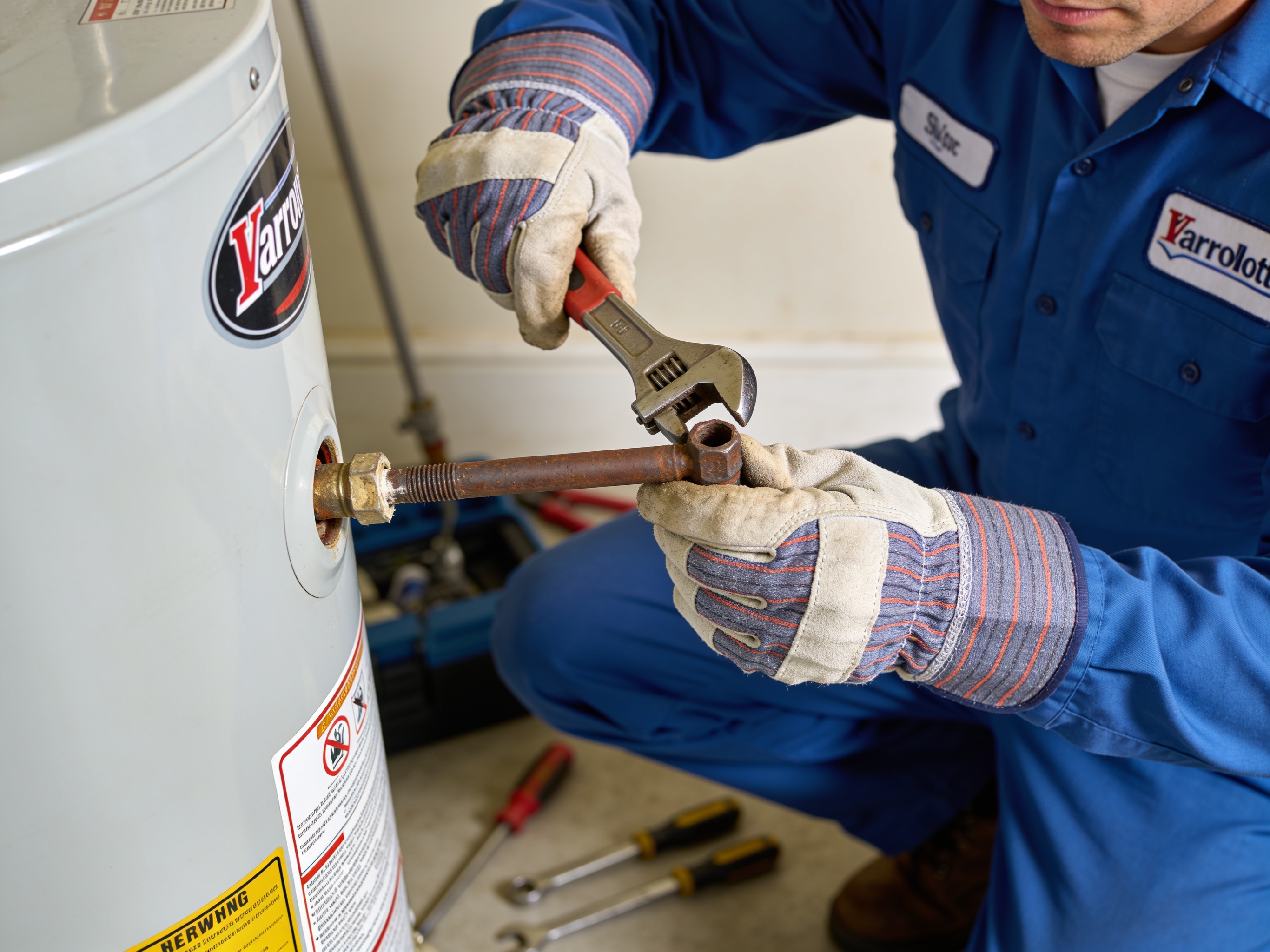
Carrollton sits in a humid subtropical climate where hot summers increase water heater workload and mild winters keep units running year-round. This pattern speeds up corrosion inside tanks, especially in neighborhoods like the Maple Street Historic District where many homes still rely on original or decades-old units. Anode rod replacement uses either magnesium or aluminum rods to draw corrosive elements away from the tank lining. In Carroll County water, which often carries higher mineral content from regional aquifers, rods deplete faster than in softer water areas, requiring checks every two to three years rather than the generic five-year interval.
Older housing stock around the Historic Downtown Square and near the University of West Georgia frequently features basement or crawl-space installations with limited access. Technicians must account for tight clearances and older plumbing connections that can crack during rod extraction. Using a powered anode rod upgrade in these settings eliminates future replacements by connecting to household current, but requires verifying grounding and outlet proximity first. Homeowners in Villa Rica or Bremen who commute through Carrollton sometimes request the same service after noticing similar sediment issues tied to the same water source.
Edge cases include tanks in Maple Street homes where sediment buildup from decades of use can trap the old rod, demanding careful flushing before new installation. Code compliance in Carroll County calls for dielectric unions on metal-to-metal connections to prevent galvanic corrosion after the job. Skipping this step in humid conditions leads to leaks within months. Replacement also involves inspecting the tank interior with a borescope when possible, because a depleted rod often signals broader scale accumulation that shortens remaining tank life.
Technician insight
In Carrollton, the thing that catches most people out with Water Heater Anode Rod Replacement is how quickly rods disappear in homes built before the 1990s around the Historic Downtown Square, where harder Carroll County water and limited basement access turn a simple swap into a two-hour job.
Historic District Tank Protection
A Maple Street home showed premature tank wear after only eight years. Inspection revealed a fully consumed magnesium rod and heavy scale. We replaced it with an aluminum rod matched to local water chemistry, added a dielectric union, and flushed the tank. The homeowner avoided replacement and the unit continues running cleanly.
Water Heater Anode Rod Replacement Services We Offer
✓Magnesium Anode Rod Replacement
Installs a fresh magnesium rod to shield steel tanks from Carroll County minerals, extending service life in homes near the University of West Georgia.
✓Aluminum Anode Rod Installation
Swaps in an aluminum rod suited for areas with higher sulfate levels, common in parts of Carrollton and nearby Newnan.
✓Powered Anode Rod Upgrade
Replaces sacrificial rods with an electrical system that prevents future replacements and works well in tight Downtown Carrollton basements.
✓Anode Rod Inspection and Flush
Checks rod condition and clears sediment in older Maple Street Historic District tanks before deciding on full replacement.
✓Anode Rod Replacement in Tankless Systems
Adapts the service for hybrid setups serving Bremen and Villa Rica commuters who maintain both tank and tankless units.
Water Heater Anode Rod Replacement Cost in Carrollton, GA
| Service | Typical Range | What Affects It |
|---|---|---|
| Standard Magnesium Rod Replacement | $175–$275 | Most common in single-story homes with good access |
| Aluminum Rod Installation | $190–$290 | Selected for higher mineral water in parts of Carroll County |
| Powered Anode Rod Upgrade | $350–$550 | Includes electrical connection and longer-term protection |
| Rod Replacement Plus Flush | $225–$325 | Adds full sediment removal for older tanks |
Ranges are typical for Carrollton, GA and confirmed with an exact written quote before any work starts.
How it works
- 1
Site Assessment
Technician inspects tank location, measures rod access, and notes any sediment or connection issues specific to the home's age and neighborhood.
- 2
Water Shutoff and Drainage
Isolates the unit, drains several gallons to relieve pressure, and prepares for rod extraction without damaging older fittings.
- 3
Rod Extraction and Inspection
Removes the depleted rod, examines tank interior condition, and determines if a standard or powered replacement fits the setup.
- 4
New Rod Installation
Threads in the selected rod with proper sealant, restores water flow, and verifies no leaks at connections.
- 5
System Flush and Test
Runs fresh water through the tank to clear debris and confirms temperature and pressure return to normal operation.
Pricing
Costs depend on rod material, tank access difficulty, and whether a powered upgrade is chosen.