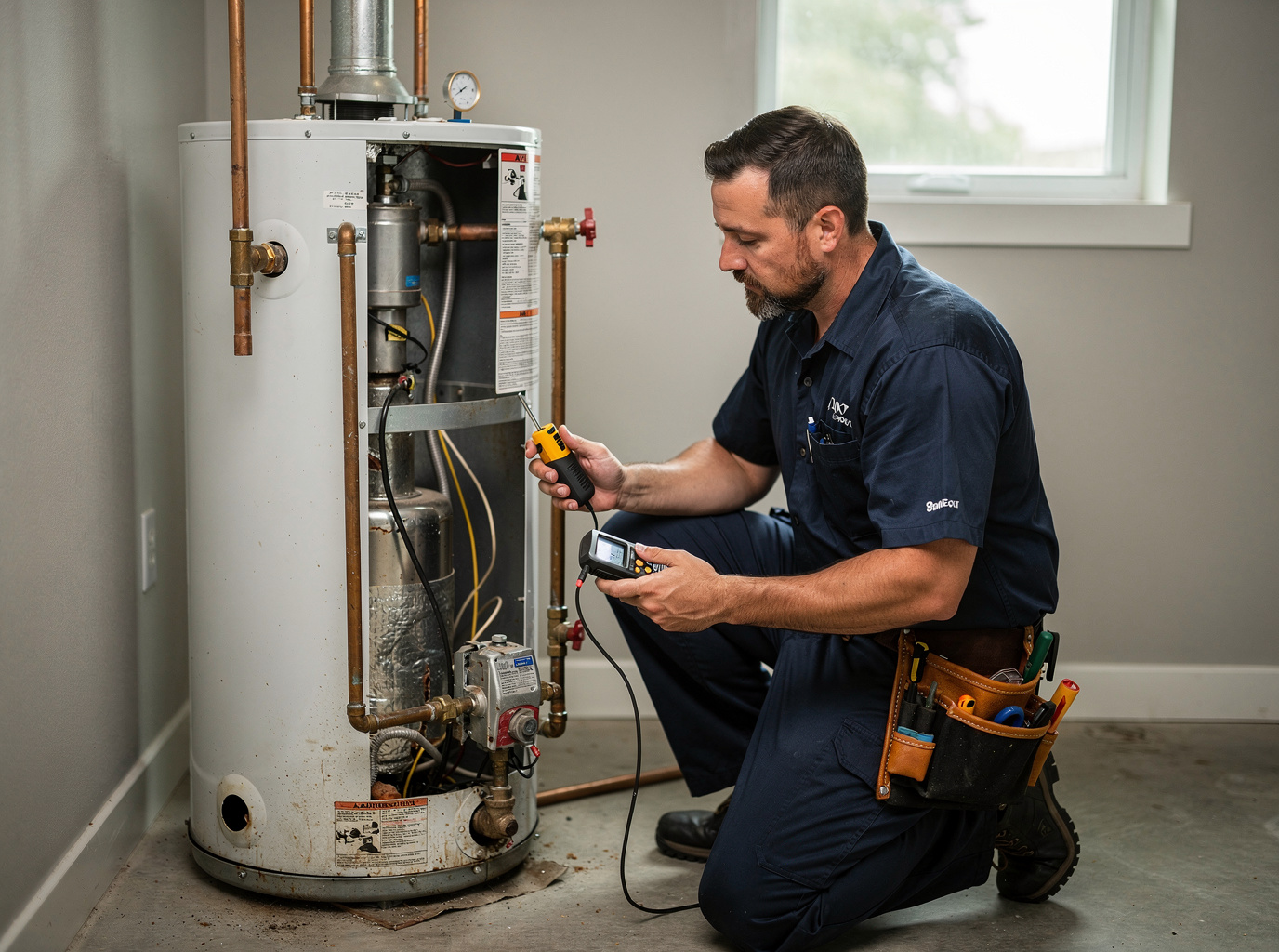
Homes in the Maple Street Historic District and around the University of West Georgia often feature older tank-style units installed decades ago. Sediment from Carroll County's mineral-rich groundwater settles at the tank bottom and insulates the heating elements or burner, so the unit runs longer yet still delivers lukewarm water. Technicians first drain and flush the tank, then check anode rod condition before deciding whether a full replacement makes sense for the property's age and usage patterns.
Mild winters in Carrollton reduce overall demand but allow scale to accumulate unnoticed until hot summers spike shower and laundry loads. Electric units common in rentals near the university frequently show failed upper or lower elements after years of hard water exposure. Gas models in single-family homes along Villa Rica Road can suffer from restricted venting or failing thermocouples that prevent the burner from staying lit long enough to recover temperature.
Code requirements in Carroll County call for proper expansion tank installation on any new or replacement unit to protect against pressure spikes from the municipal supply. Technicians also verify seismic strapping on units in homes built before current standards and ensure T&P valve discharge lines terminate correctly outdoors. Skipping these steps during a repair visit often leads to callbacks when inspectors flag the installation later.
Nearby cities such as Bremen and Newnan share similar water chemistry, yet Carrollton's slightly higher iron content accelerates element corrosion on electric models. Homeowners who notice the hot water supply dropping first in upstairs baths usually trace the issue to long horizontal runs that lose heat before reaching fixtures. A targeted flush and element swap often restores performance without immediate full replacement.
Technician insight
In Carrollton, the thing that catches most people out with Water Heater Not Heating Enough is sediment from our local groundwater settling in tanks installed in Maple Street Historic District homes built before modern flushing practices became routine.
Lukewarm Supply in University Area Rental
A two-story rental near the University of West Georgia reported hot water fading after ten minutes of use. Inspection showed heavy sediment at the tank bottom and a worn lower element. The technician flushed the tank, replaced both elements, and verified recovery at the upstairs fixtures. Tenants regained consistent hot water without needing a full unit swap.
Water Heater Not Heating Enough Services We Offer
✓Sediment Flush and Cleaning
Removes mineral buildup that blocks heat transfer in Carrollton tanks and restores recovery time without full replacement.
✓Electric Element Replacement
Swaps failed upper or lower elements common in University of West Georgia area rentals after years of hard water exposure.
✓Gas Burner and Thermocouple Service
Cleans or replaces burner components and thermocouples so units in older Downtown Carrollton homes maintain steady flame.
✓Thermostat Calibration and Replacement
Adjusts or installs new thermostats to correct temperature shortfalls in both gas and electric models throughout Carroll County.
✓Dip Tube Repair
Replaces cracked dip tubes that allow cold water to mix at the top outlet, a frequent cause of lukewarm delivery in historic district homes.
Water Heater Not Heating Enough Cost in Carrollton, GA
| Service | Typical Range | What Affects It |
|---|---|---|
| Sediment Flush | $150–$275 | Higher when multiple flushes are required on neglected tanks |
| Electric Element Replacement | $225–$375 | Varies by access difficulty in older homes |
| Thermostat Replacement | $175–$300 | Includes calibration and testing |
| Dip Tube Replacement | $200–$350 | Often paired with flush on units over 10 years old |
Ranges are typical for Carrollton, GA and confirmed with an exact written quote before any work starts.
How it works
- 1
On-Site Diagnosis
Technician inspects the unit at the Carrollton address, checks incoming water temperature, and tests element resistance or gas pressure.
- 2
Tank Flush
Drains and flushes sediment from the tank bottom using local water pressure to clear the most common cause of poor heating.
- 3
Component Replacement
Swaps failed parts such as elements, thermostats, or dip tubes while confirming compatibility with the existing model.
- 4
System Test and Verification
Refills the tank, restores power or gas, and confirms steady hot water delivery at multiple fixtures before leaving the site.
Pricing
Pricing depends on whether the fix involves a simple flush, element swap, or additional parts for older units common in historic neighborhoods.